
What Set-Out Reveals That Drawings Can't
A set of drawings can show a clear design intent.
They define layout, structure, and how the home is meant to come together. But there’s a point in every build where those drawings are tested against something less predictable.
The site itself.
Set-out is where that happens. It’s the stage where the design is transferred from paper to physical position on the ground, and where levels, structure, and alignment are first measured against real conditions.
It’s also where discrepancies tend to surface.
Why Set-Out Is the First Real Checkpoint
Set-out is one of the first true checkpoints in a build.
Up until that point, most decisions are based on drawings, surveys, and assumptions about existing conditions. Once set-out begins, those assumptions are tested.
If something does not align, whether it is levels, structural relationships, or dimensions, this is often where it becomes visible.
Catching those issues at this stage allows them to be resolved before they carry through the rest of the build.
Roslyn: When the Site Told a Different Story
On a renovation and extension project in Charlestown, early set-out revealed discrepancies between the garage and first floor levels, along with issues in the structural steel detailing.
These were not design changes or refinements. They were differences between how the project had been drawn and how the site conditions actually presented once construction began.
Left unresolved, these issues would have affected both the function and the structural alignment of the home.
Because they were identified during set-out, adjustments could be made early. The garage head height was increased, and the structural approach was corrected before those elements became fixed within the build.
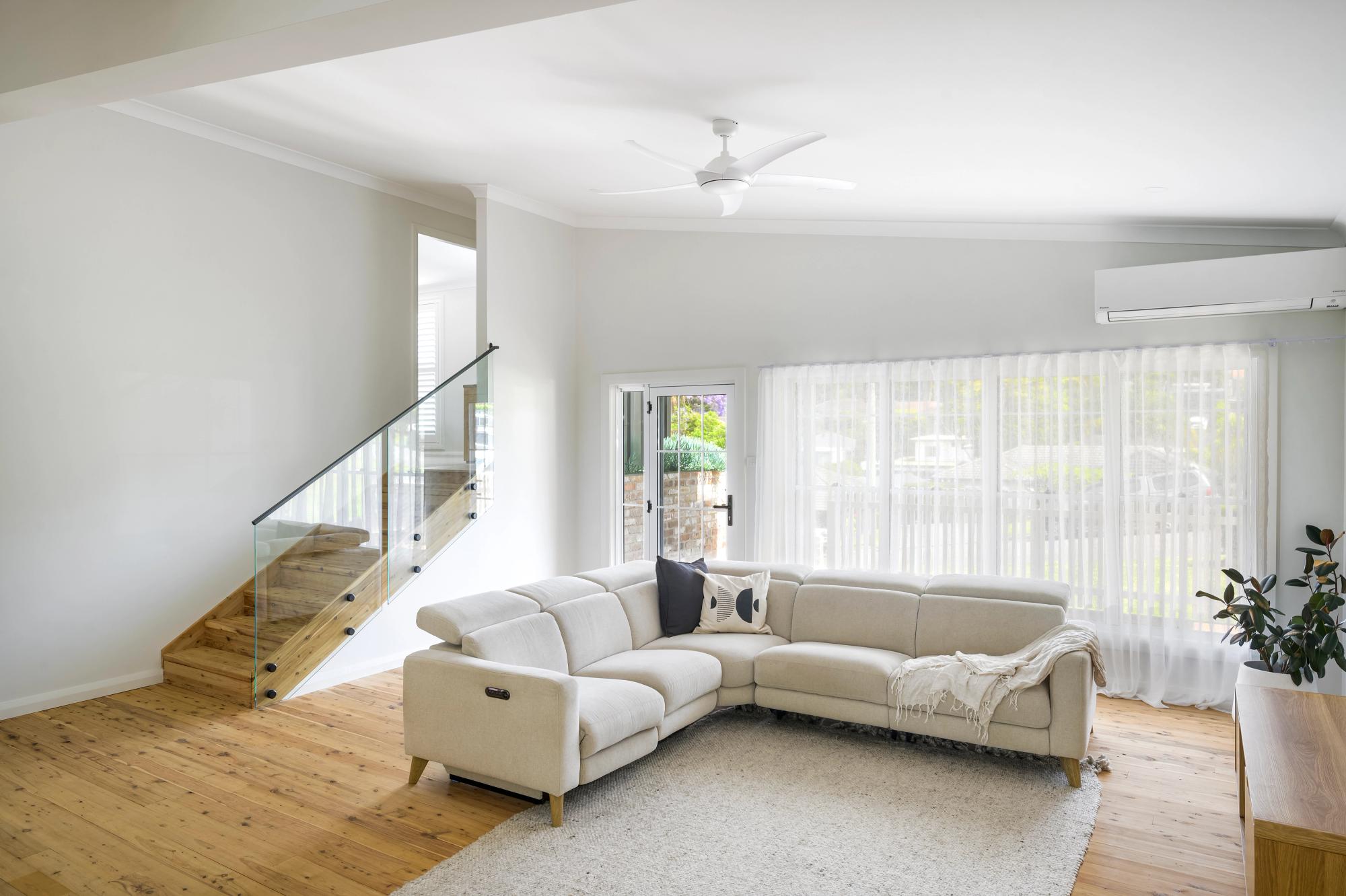
Discrepancies identified at set-out were resolved early, allowing the extension to integrate cleanly with the existing home
Why Some Issues Only Appear on Site
Even with detailed documentation, drawings are still an interpretation of conditions.
Existing structures, levels, and site conditions do not always behave exactly as expected. Small variances can exist, and when multiple elements come together, those variances can create misalignment.
Set-out is where those relationships are physically tested.
It is not about errors in design. It is about translating a design into real conditions and understanding where adjustments are needed.
What Builder Oversight Looks Like at This Stage
Identifying these issues relies on more than marking out positions.
It requires reviewing how the design interacts with the site, checking alignment between different parts of the structure, and understanding how each element will carry through the build.
This level of oversight is what allows discrepancies to be picked up early, before they affect multiple stages of construction.
What Happens When Discrepancies Are Not Caught
If issues at set-out are not identified, they tend to carry forward.
That can lead to misaligned structure, compromised ceiling heights or clearances, additional rework later in the build, and increased cost and disruption.
What could have been a contained adjustment becomes a larger problem.
How Catching It Early Changed the Roslyn Build
On the Roslyn project, resolving these discrepancies at set-out allowed the build to progress cleanly.
The structure aligned properly, levels were corrected early, and the extension integrated with the existing home without conflict.
The adjustment itself was relatively contained. The impact of not addressing it would not have been.
Set-out is more than a preliminary step in construction. It is where drawings meet reality. What is identified and resolved at this stage often determines how smoothly the rest of the build unfolds.
If you are planning a renovation or extension in Newcastle and want a builder who pays close attention from the very first stage on site, get in touch to talk through your project.