
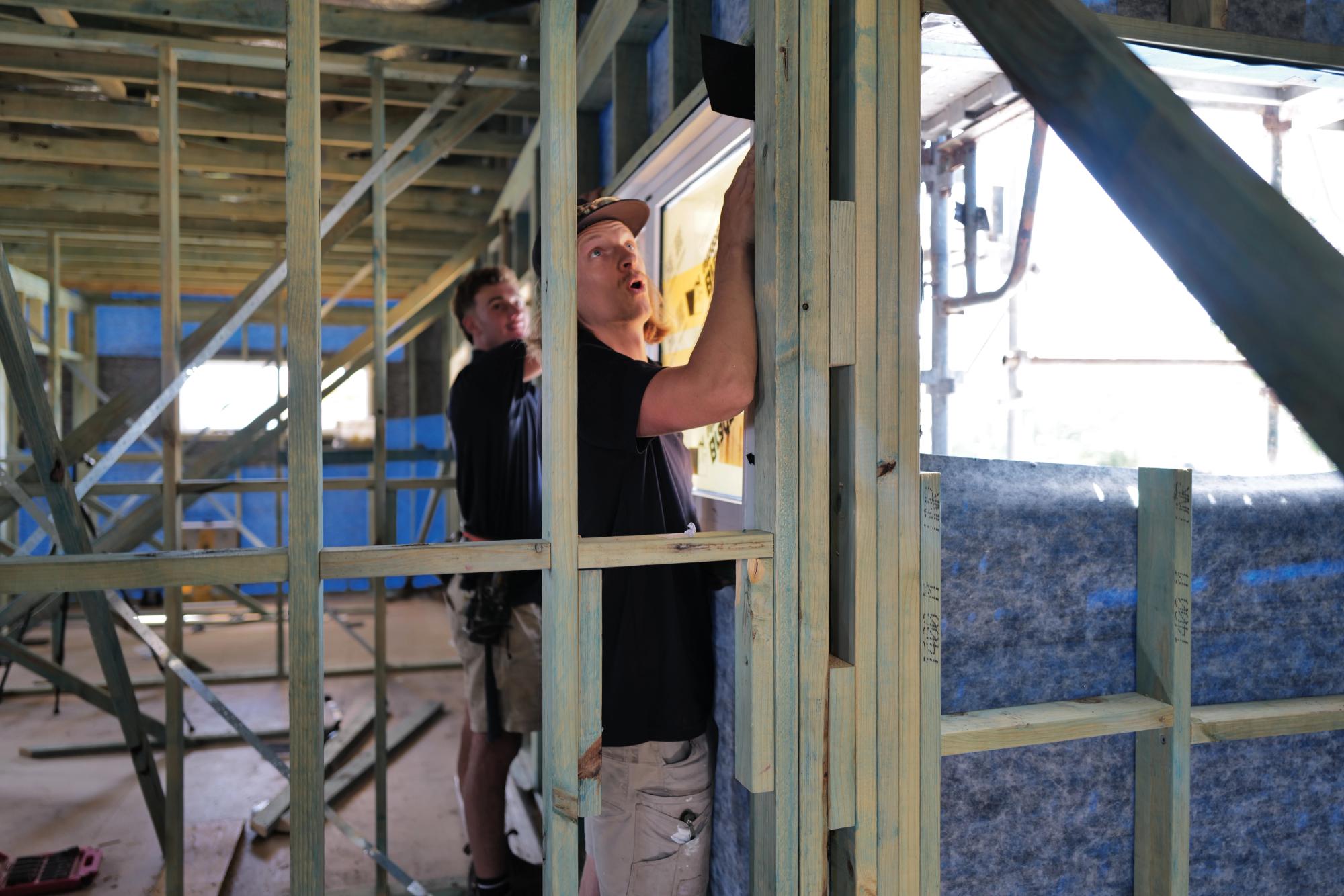
What Actually Keeps a Complex Build Moving
From the outside, a build can look straightforward.
Trades arrive, work progresses, and the structure takes shape. What is not as visible is the level of coordination required to keep everything moving, especially on more constrained or complex sites.
Progress on site is rarely just about what is happening in front of you. It is shaped by planning, sequencing, communication, and how well the moving parts are managed behind the scenes.
Why Momentum Is Harder to Maintain Than It Looks
On a complex build, momentum is fragile.
Limited access, tight sites, multiple trades, and external constraints all mean that small disruptions can have a larger impact. When coordination is off, delays tend to compound quickly. When it is managed well, the build feels controlled, even under pressure.
What keeps a project moving is not one decision, but how everything is aligned.
Carrington: Managing a Tight Site with Multiple Moving Parts
On a project in Carrington, the site presented several layers of complexity.
The block was tight, with neighbouring properties close by, limited space for material storage, and restricted movement across the site. At the same time, the build involved structural work, boundary coordination, and a council modification during construction.
To keep the project progressing, sequencing was critical.
Trades were scheduled to move through the site in a logical order, avoiding unnecessary overlap. Deliveries were timed carefully to prevent congestion, and materials were staged in a way that supported the next phase of work rather than getting in the way of it.
This level of planning is not visible in the finished home, but it has a direct impact on how smoothly the build runs.
Every stage was sequenced carefully, with limited space for materials, trades and movement across the site
Coordinating Around Constraints
Building on a tight site also means working around more than just the structure.
Neighbouring properties, access points, and shared boundaries all need to be considered. Communication becomes part of the process, not just with the client and consultants, but with those around the site as well.
Managing this properly helps avoid delays, reduces friction, and keeps the project moving without unnecessary interruptions.
Sequencing Trades and Materials
One of the biggest factors in maintaining momentum is sequencing.
Trades need to arrive at the right time, with the right access, and with the site prepared for their work. If one stage runs late or overlaps poorly with another, it can create a knock-on effect across the rest of the build.
On a constrained site, this becomes even more important. There is less space to recover from poor timing, so each stage needs to be considered in relation to what comes next.
Material delivery follows the same principle. Too early, and it creates congestion. Too late, and it slows progress.
The Pool Installation: Planning for One Critical Moment
One of the more complex moments on the Carrington project was the installation of the plunge pool.
With limited access, the pool needed to be craned through the home and positioned precisely into place. This required coordination across trades, timing around structural readiness, and clear planning to ensure the lift could be completed safely and efficiently.
It is a single moment in the build, but one that depends on everything leading up to it being aligned.
The pool was craned through the home and into position, a single moment that depended on everything before it being aligned
The Factors That Make the Difference
Across projects like this, the same factors tend to determine whether a build maintains momentum: clear sequencing of trades, well-timed material delivery, early planning around site constraints, consistent communication between all parties, and the ability to adjust without losing control.
None of these are particularly visible on their own. Together, they are what keep the project progressing.
How the Carrington Build Came Together
On the Carrington project, these elements allowed the build to move forward without unnecessary disruption, despite the constraints of the site and the complexity of the work.
The finished home reflects that control. Not just in how it looks, but in how the process was managed from start to finish.
What keeps a build moving is not just activity on site. It is the planning, coordination, and decision-making that sits behind it. When those are aligned, even complex projects can progress smoothly. When they are not, small issues tend to grow quickly.
If you are planning a build on a tight or complex site in Newcastle and want a builder who understands how to keep things moving, get in touch to talk through your project.