
The Difference Between Added Space and a Cohesive Extension
A lot of extensions add more room to a home.
Fewer improve how the home actually feels to live in.
The difference usually isn’t size, finishes, or how much was spent. It comes down to whether the extension feels connected to the original house, or whether it feels like a separate space attached later.
That sense of cohesion is shaped through construction as much as design.
Why Some Extensions Feel Disconnected
One of the most common problems in extension work is that the old and new parts of the home never fully come together.
You walk from one space into another and the transition feels obvious. Ceiling heights shift awkwardly, floor levels don’t align properly, materials feel inconsistent, or the extension looks visually disconnected from the original home.
Individually, these things can seem minor. Together, they affect how settled the home feels once completed.
A Cohesive Extension Starts with the Existing Home
Good extension work starts with understanding what’s already there.
That includes:
- the proportions of the original home
- structural limitations
- floor and ceiling levels
- how natural light moves through the existing spaces
- how the home connects to the site
The goal isn’t to replicate the old house exactly. It’s to make sure the new work feels aligned with it.
Kotara South: Extending Without Losing Character
On a rear extension project in Kotara South, one of the key challenges was making the new work feel consistent with the original 1960s home once construction was complete.
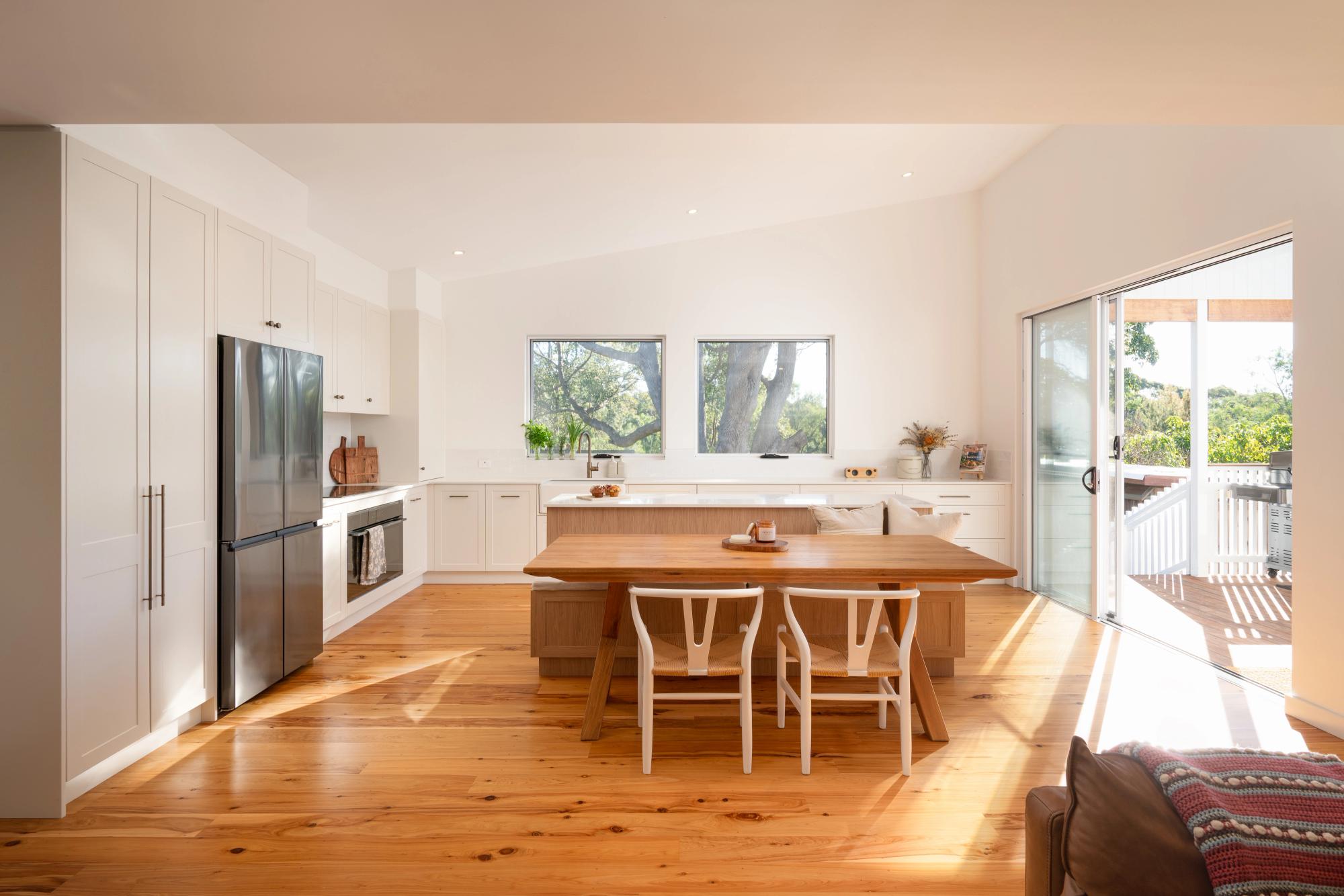
Rather than treating the extension as a separate addition, the focus during the build was on how the old and new parts of the home connected. Floor levels, ceiling lines, material transitions, and structural openings all needed to align cleanly so the spaces felt resolved as a whole.
This became particularly important through the rear living areas, where the original footprint opened into the new extension and garden connection. The success of the project came less from the amount of added space and more from how naturally the extension integrated with the existing home.
A quiet corner made for slow afternoons and long conversations.
Structure Plays a Bigger Role Than People Expect
A cohesive extension is not just about finishes.
Structural decisions affect how spaces connect, how open the home feels, and whether transitions between old and new feel natural. Aligning ceiling heights, openings, and structural spans properly has a major impact on the finished outcome.
These are decisions that happen during planning and construction, not just styling.
Opening the Rear of a Home Properly
Many older homes were designed with smaller, separated rooms and limited connection to outdoor areas.
Opening the rear of the home changes more than just the layout. It changes how people move through the space, how natural light enters the home, and how connected the living areas feel to the backyard.
Done well, the extension feels like a continuation of the home rather than a new section added onto the back.
Consistency Matters More Than Matching Everything
A cohesive extension does not mean making the new work look old.
It means making sure the materials, detailing, and proportions relate properly to the original home so the transition feels intentional.
That might involve repeating certain materials, carrying consistent lines through the build, or making sure junctions between old and new are handled cleanly.
The goal is consistency, not imitation.
Where the Difference Shows
On the Kotara South project, the extension added significantly more living space, but the success of the project came from how naturally it integrated with the original home.
The new living areas feel open and connected to the garden, the master suite sits comfortably within the overall layout, and the home works as a complete whole rather than separate old and new sections.
The Part People Notice Without Realising
Adding space to a home is relatively straightforward.
Making that space feel cohesive is where the difference lies.
The best extensions don’t feel added on. They feel settled, connected, and consistent with the original home, which comes from careful planning, construction detail, and the way the project is delivered from start to finish. That’s where Martrick’s approach makes the difference.