
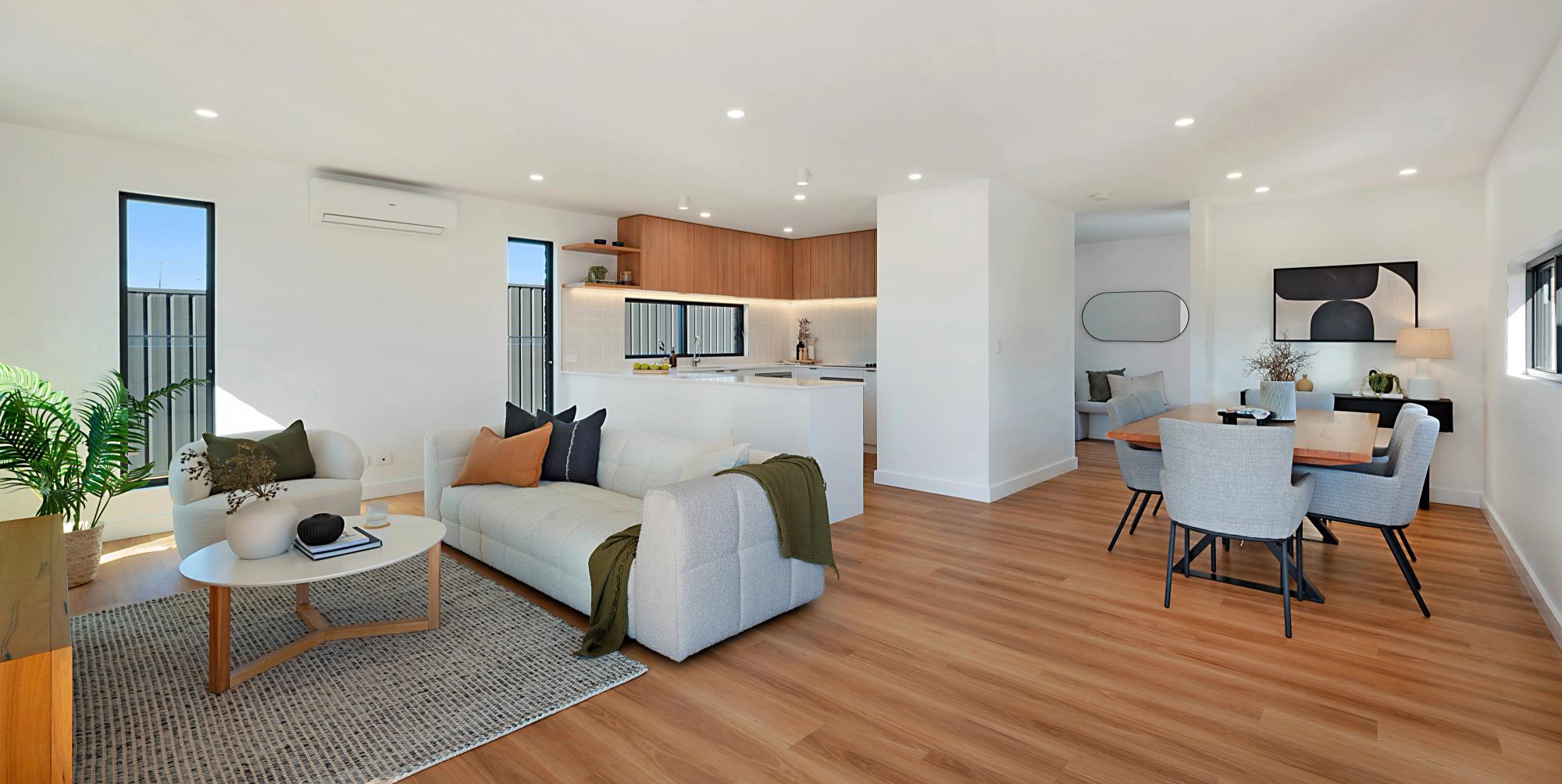
The Builder-Architect Relationship: What It Means for Your Project
When people think about building or renovating, the architect and the builder tend to occupy separate parts of the process.
The architect designs. The builder builds. One comes first, the other follows.
In practice, the projects that come together best are rarely structured that way.
Two Different Kinds of Knowledge
Architects bring design intent. They understand space, light, proportion, and how a home should feel to live in. A good architect translates a client's brief into something considered and resolved on paper.
Builders bring construction knowledge. They understand how materials behave, how trades sequence, where details can fail, and what a design actually costs to deliver. A good builder can look at a set of plans and identify where problems are likely to emerge before anyone picks up a tool.
These are different kinds of knowledge. And when they're applied together, early in the process, the result is almost always better than when they operate in sequence.
What Early Involvement Actually Changes
On a custom home in Cardiff South, designed by Tony Laurent Architect, Martrick was brought into the process during the design phase rather than after documentation was complete.
That early involvement led to several targeted improvements. A structural redesign removed a post from the kitchen, creating a cleaner open-plan layout. Steel beam sizing was increased to support wider spans. Skylights were introduced upstairs. Glazing was added above the staircase, turning what would have been a darker transition space into a feature.
None of these changes altered the architectural intent. They strengthened it, by applying construction knowledge before the design was locked in and changes became expensive.
On a secondary dwelling in Stockton, a council modification was lodged mid-build to refine the roofline and improve views. Because the builder, architect, and certifier were aligned and communicating consistently, the changes were absorbed without disrupting the timeline. That kind of mid-build flexibility depends on a working relationship that was already established, not one being built under pressure.
The Cost of Getting Involved Late
When a builder is engaged after documentation is finalised, the options narrow.
Design decisions that could have been improved with construction input are locked in. Details that would have been straightforward to adjust at design stage become variations during the build, which cost more and take longer. Problems that could have been identified early surface on site, where solving them is harder and more disruptive.
This isn't a criticism of architects who work without early builder input. It's a structural reality of how the process works. The later construction knowledge enters the conversation, the less it can do.
A Relationship Worth Building
Across multiple projects, Martrick has worked alongside Tony Laurent Architect, JT Studio, Den-ad Design, and Steve Rankin, among others.
These aren't one-off engagements. They're working relationships built across projects, where each party understands how the other thinks and what they're trying to achieve. That familiarity means less friction, faster problem-solving, and a shared commitment to the outcome rather than just the delivery of a scope.
For clients, the practical benefit is significant. When the builder and architect already have an established way of working together, the project runs more smoothly from the start. Issues get resolved in conversation rather than in writing. Opportunities get acted on rather than noted and deferred.
What This Means If You're Planning a Build
If you're at the early stages of a project, the most useful question isn't which builder or which architect. It's whether the people you're considering have worked together before, and whether they'll be in the same conversation from the start.
A builder who is involved during design can contribute in ways that aren't possible once documentation is complete. An architect who understands how their builder thinks can make design decisions with confidence rather than guesswork.
The relationship between the two is, in many ways, the foundation the project is built on.
A Final Thought
The builder-architect relationship isn't a procedural detail. It's one of the most significant factors in how a project unfolds and what the finished result looks like.
Getting those two parties aligned early, and choosing people who already know how to work together, is one of the clearest ways to improve the outcome before a single decision about materials or layout has been made.