
Redefining What a Granny Flat Can Be
This project in Stockton was never meant to be a standard secondary dwelling.
The clients, based in the Southern Highlands and working in Newcastle during the week, needed a low-maintenance home that could function as a comfortable base. At the same time, the site itself offered something more. Strong coastal views, dual access, and proximity to the beach created an opportunity to deliver a design that went well beyond a typical granny flat.
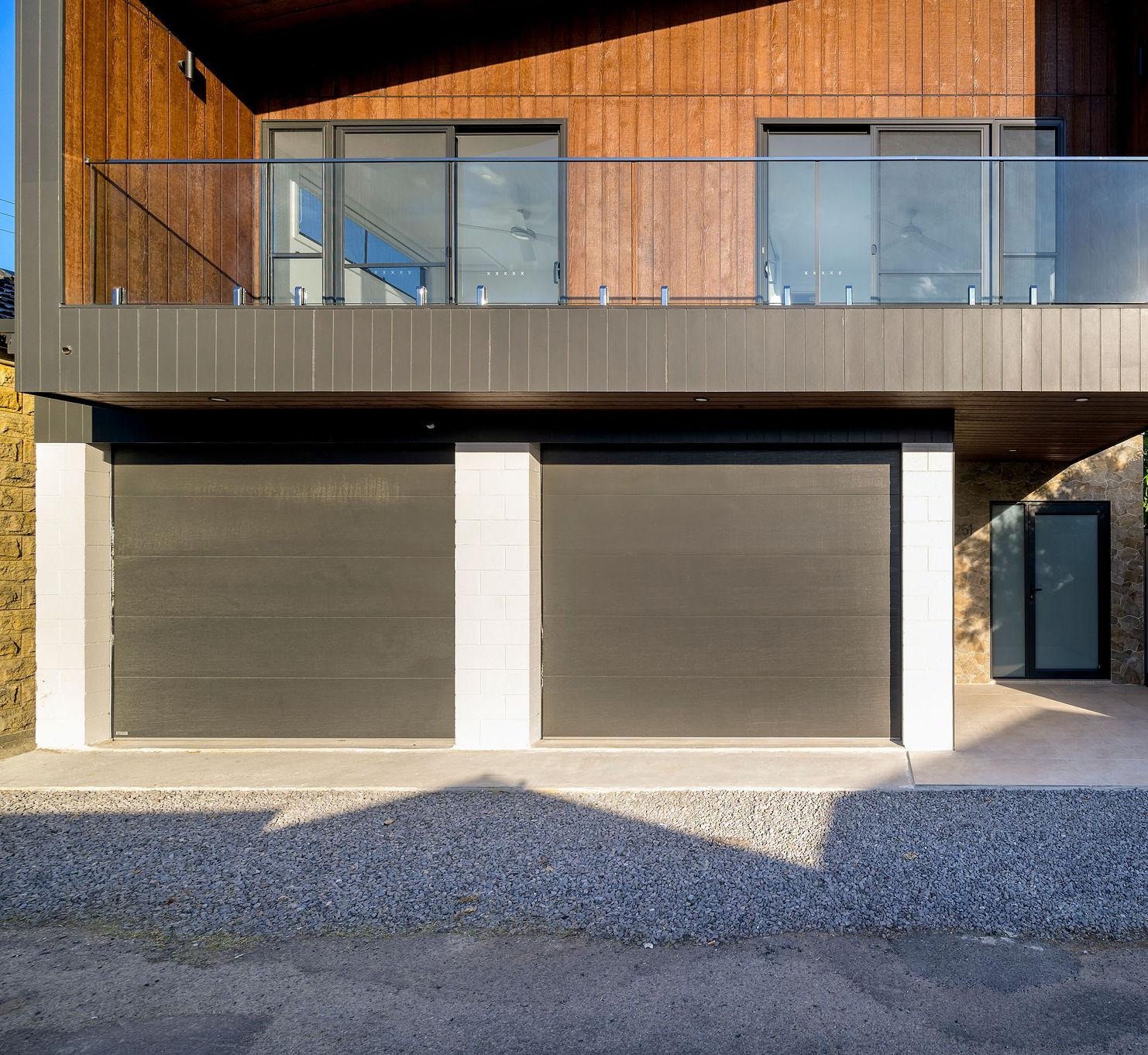
The brief reflected that. A two-bedroom dwelling with a clear architectural identity, durable materials suited to a coastal environment, and an upper-level space that could be used for entertaining and taking advantage of the outlook.
Design Approach
Working alongside JT Studio, the design was structured across levels to create clear separation between function and lifestyle.
The ground floor provides the practical living spaces, while the upper level opens up to views and outdoor entertaining. A rooftop area was introduced to maximise the site's position, creating a space that feels more like an extension of the living area than an add-on.
The overall form is sharp and geometric, with a restrained material palette combining dark-toned cladding, raw timber, and composite elements. It is a design that holds its own, despite being classified as a secondary dwelling.
Building for Coastal Conditions
Durability was a key driver from the beginning.
Building in a coastal environment means materials and detailing need to withstand exposure to salt, wind, and moisture over time. This influenced both the structure and the finishes, with robust construction methods and weather-resistant materials used throughout.
Passive design was also considered, with cross-flow ventilation, controlled solar access, and high-performance glazing contributing to how the home performs day to day.
Construction and Technical Detail
From a construction perspective, this project required a higher level of technical detailing than a typical secondary dwelling.
Boundary-to-boundary construction meant fire-rated systems were required, including core-filled blockwork walls. Suspended concrete slabs were used to support the structure, and the rooftop area required a layered approach to waterproofing and drainage.
The roof deck in particular involved a raked Alphafloor system, a waterproof membrane, custom box gutters, and a pedestal paving system for drainage.
Each layer needed to be considered and executed correctly to ensure long-term performance.
Adapting During Construction
As the build progressed, a council modification was lodged to refine the roofline and improve views.
This required coordination between the builder, architect, and certifier, as well as adjustments to structural elements and detailing. Because the team was aligned and communication was consistent, the changes were implemented without disrupting the overall timeline.
It is a good example of how mid-build changes can add value when they are managed properly.
What the Finished Dwelling Delivers
The completed home challenges the idea of what a granny flat typically is.
Rather than a secondary structure, it functions as a fully realised architectural dwelling. The spaces are well defined, the materials are durable, and the connection to the surrounding environment has been maximised.
The clients now have a practical, low-maintenance home that supports their lifestyle while also making full use of the site's potential.
Projects like this highlight what is possible when design intent, construction knowledge, and client vision are aligned from the start. It is not about increasing size or complexity for the sake of it. It is about delivering something that works properly, performs over time, and feels considered in every part of it.
If you are planning a secondary dwelling or custom build in Newcastle, get in touch to talk through what is possible on your site.