
How Builder Input Improves a Design Without Changing It
Most people assume that once a design is complete, the builder's role is to deliver what has been drawn.
In reality, there is still a layer of refinement that happens between design and construction. It does not change the overall direction of the home, but it can significantly improve how it works once built.
This is where builder input sits. Not in redesigning the home, but in strengthening what is already there.
The Layer Between Design and Construction
A set of drawings can represent a clear design intent, but it does not always account for how the home will be built in practice.
Structure, sequencing, material transitions, and buildability all influence how well that design is carried through. When these elements are considered early enough, small adjustments can be made without affecting the overall vision.
Left too late, those same adjustments become harder to implement or are missed entirely.
Cardiff South: Refining Without Redesigning
On a custom home in Cardiff South, the design already had a strong architectural direction.
The focus during builder involvement was not to change that direction, but to review it through a construction lens and identify where practical refinements could improve the outcome.
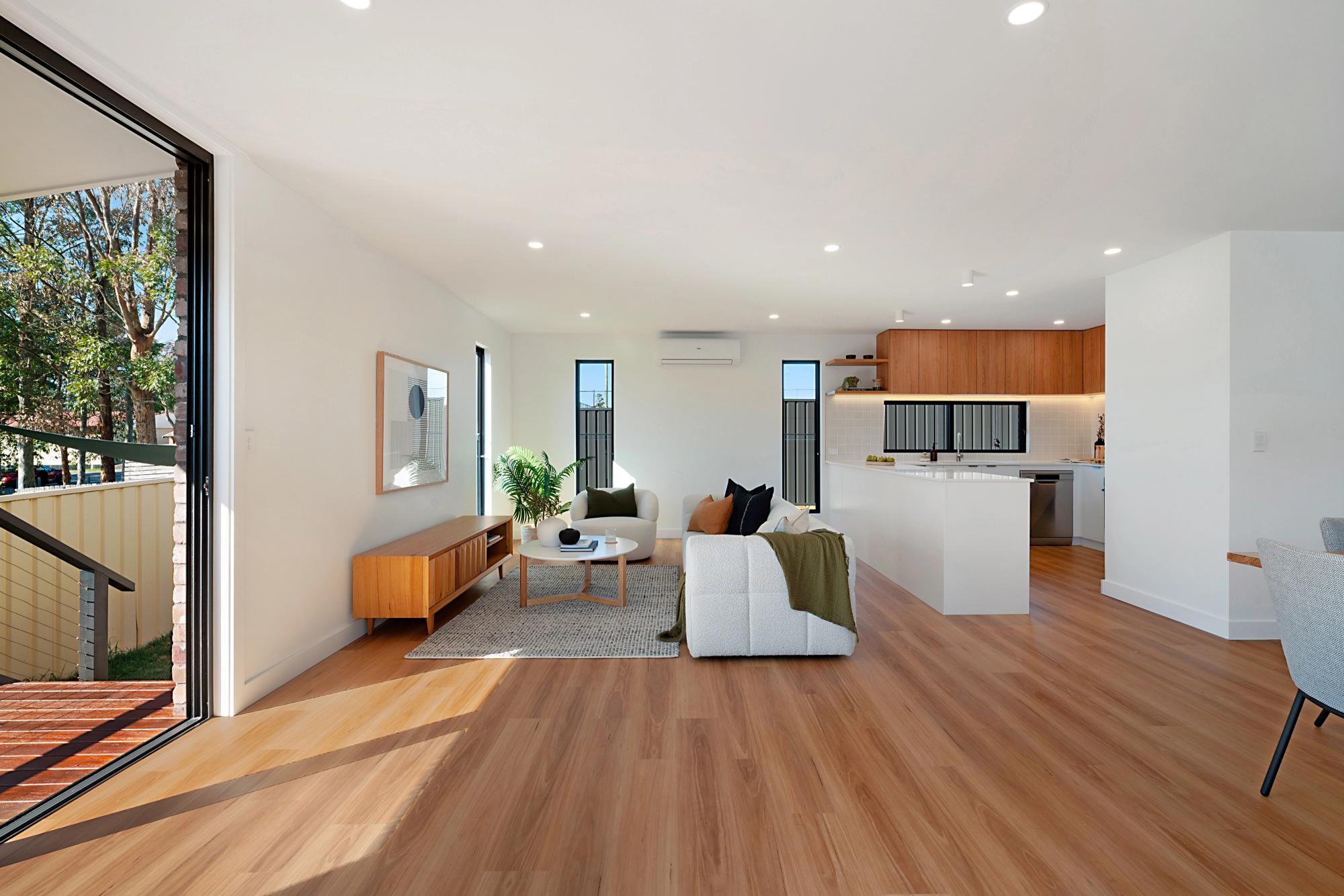
One of the key adjustments involved the structure supporting the main living area. By reworking the structural approach, a post could be removed from the kitchen, creating a cleaner and more usable open-plan space. Steel beam sizing was also increased to achieve wider spans, improving how the spaces connected without introducing additional elements.
These changes did not alter the design intent. They allowed it to be realised more cleanly.
Reworking the structural approach allowed a post to be removed from the kitchen, creating a cleaner and more open layout
Improving How the Home Performs Day to Day
Builder input often focuses on how the home will be experienced over time.
On this project, that included reviewing how natural light moved through the upper level. Introducing skylights and adding glazing above the staircase helped bring light into areas that would otherwise feel more enclosed.
These were not major design changes. They were practical adjustments that improved how the home feels in everyday use.
Glazing above the staircase and skylights were added during design to bring natural light into areas that would otherwise feel enclosed
Where Builder Input Adds Value
Across projects, this type of input tends to focus on structural efficiency and layout alignment, buildability and sequencing, material transitions and junctions, natural light and internal flow, and resolving small issues before they become constraints.
None of these change the overall concept. They strengthen how it comes together.
Protecting the Design Through Construction
One of the less obvious roles of the builder is protecting the design as it moves into construction.
Drawings do not always capture every condition on site. Adjustments are often needed as the build progresses, and the way those adjustments are handled determines whether the original intent is maintained.
When builder input is aligned with the design from the beginning, those decisions tend to support the outcome rather than compromise it.
What the Cardiff South Home Looks Like as a Result
On the Cardiff South project, these refinements resulted in a home that feels clean, consistent, and well resolved.
The layout works without interruption, natural light moves through the space as intended, and the overall design holds together without unnecessary complexity.
The design itself did not change. The way it was delivered did.
Builder input is not about redesigning a home. It is about making sure the design works as intended once it is built. The most effective changes are often the ones that go unnoticed, but they are the ones that shape how the home performs over time.
If you are working with an architect on a custom home in Newcastle and want a builder involved during design, get in touch to talk through how that process works.