
Custom Home Features That Actually Add Long-Term Value
When people plan a custom home, a lot of attention goes into finishes.
What it looks like when it's complete. What stands out. What feels new.
But long-term value is shaped by different decisions. It comes from how the home is built, how it functions over time, and how well it holds up beyond the first few years.
Across different projects, the features that last tend to follow the same pattern. They are less about visual impact and more about how the home performs day to day.
Not All Features Age the Same Way
Some design choices are immediately noticeable but lose impact over time. Others are less obvious at the start but become more valuable the longer you live with them.
Materials are one of the clearest examples of this.
Cardiff South: Materials That Settle Over Time
On a custom home in Cardiff South, the design focused on restraint, durability, and consistency.
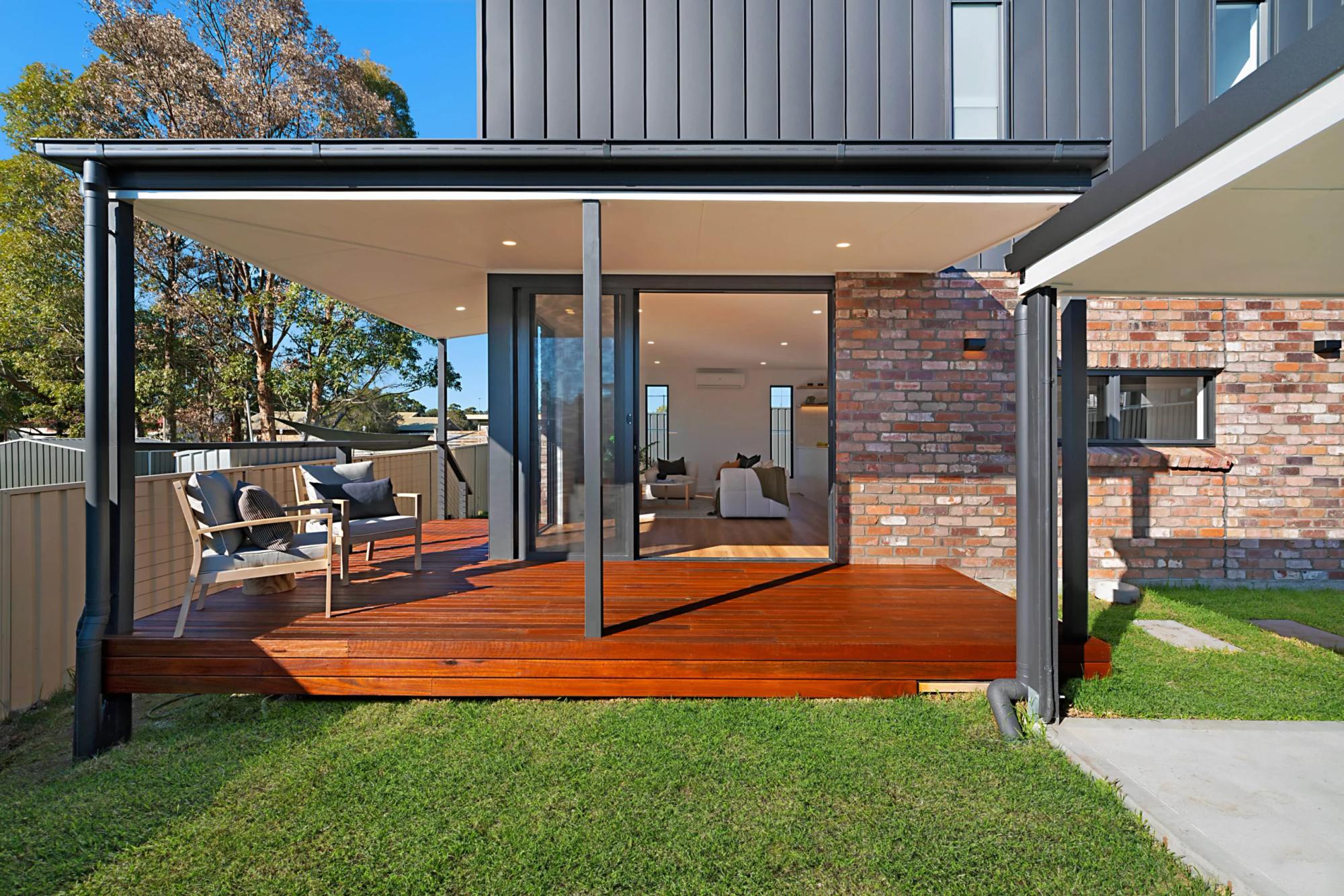
The material palette was kept simple. Recycled brick, blackbutt timber, standing seam cladding, and brushed nickel finishes were used throughout the home. These materials do not rely on contrast or novelty. They hold their own over time and continue to feel consistent across different spaces.
Rather than trying to create standout moments in each area, the focus was on building a home that would age well as a whole.
Bold contemporary design softened by natural timber and a thoughtfully landscaped entry
Eleebana: Layout That Works Long-Term
Layout is one of the hardest things to change once a home is built, which is why it has such a strong influence on long-term value.
In Eleebana, early design and structural decisions allowed the main living areas to open up properly, without unnecessary interruptions. Wider spans and clearer connections between spaces created a layout that feels resolved, rather than something that needs to be adjusted or worked around over time.
The result is a home that functions easily day to day, without relying on additional elements to compensate for layout limitations.
Seamless indoor-outdoor living with warm timber floors, a sun-filled open layout and effortless flow to the deck beyond
Carrington: Designing for Real Family Use
Long-term value is also tied closely to how well a home supports the way a family actually lives.
In Carrington, the design responded directly to the needs of a growing family, with additional bedrooms, multiple living areas, and a dedicated playroom integrated into the layout. The inclusion of an attic-style playroom with skylights and a Velux sky door created a space that adds both flexibility and personality, without disconnecting from the rest of the home.
These decisions are not about visual impact. They are about making sure the home continues to work as the family grows and changes.
Clean lines and natural materials connect the living space to the upper level, with glass and timber working together to keep the area light and open
Cardiff South and Carrington: Natural Light That Adds Value Every Day
Natural light is one of the few features that improves a home continuously.
In Cardiff South, the home was oriented to maximise its northerly aspect, allowing light to move through the space consistently throughout the day. Skylights and internal glazing were also used to bring light into areas that might otherwise feel secondary.
In Carrington, skylights and high-level windows were used in a similar way, helping to brighten tighter areas of the home and improve the overall feel of the spaces.
These are not features that date. They continue to add value every day through how the home feels and functions.
A layout that works long-term, with open connections between living, dining and kitchen that feel resolved rather than forced
Stockton: Building for Performance, Not Just Appearance
Long-term value is also shaped by how a home performs over time, particularly in more demanding environments.
In Stockton, building in a coastal setting meant durability was a key consideration. Material selection, waterproofing systems, and construction detailing were all designed to withstand exposure to salt, wind, and moisture.
From boundary-to-boundary fire-rated construction to layered roof deck systems, many of the most important decisions in this project are not immediately visible. They are built into the structure of the home and influence how it holds up over time.
These are the kinds of features that reduce maintenance and protect the home's long-term performance.
Built for performance in a coastal environment, with durable materials and construction detailing designed to hold up over time
Consistency Matters More Than Contrast
A common mistake in custom homes is trying to make every space stand out through different materials, finishes, or detailing.
Over time, that approach can make the home feel inconsistent.
Across projects like Cardiff South and Eleebana, a more controlled material palette and consistent detailing helped create homes that feel more settled and less tied to a specific point in time. Materials were repeated, transitions were considered, and the overall design held together as a complete whole.
That consistency is what allows a home to age well.
An entertainer's dream, with a fully equipped outdoor kitchen built for long weekend gatherings
How These Decisions Add Up
Long-term value rarely comes from a single feature.
It is created through a series of decisions that work together. Materials that hold up over time. Layouts that continue to function. Light that improves the way spaces feel. Construction that reduces maintenance and supports performance.
These are not always the most obvious choices at the start, but they are the ones that shape how a home feels years after it is built.
Long-term value is not about what stands out on day one. It comes from decisions that continue to perform over time, both in how the home looks and how it functions. Those are the choices that make a custom home worth the investment.
If you are planning a custom home and want to focus on decisions that last, get in touch to talk through your project.