
Building on a Battle-Axe or Constrained Block
A battle-axe block is a rear lot that sits behind another property, usually connected to the street by a long, narrow driveway.
They are often chosen for privacy, outlook, or to make use of land that is not laid out like a standard suburban block. From a construction point of view, though, they come with a different set of challenges.
Access is tighter. Space is more limited. Every part of the build needs to be planned more carefully from the start.
That does not make them a problem. It just means they require a more deliberate approach.
What Makes These Sites Different
The biggest difference is access.
On a standard block, materials, trades, and equipment can move more freely across the site. There is usually more flexibility in how the build is staged. On a battle-axe or constrained site, everything has to move through a restricted entry point, often between existing properties.
That changes how the entire project is planned.
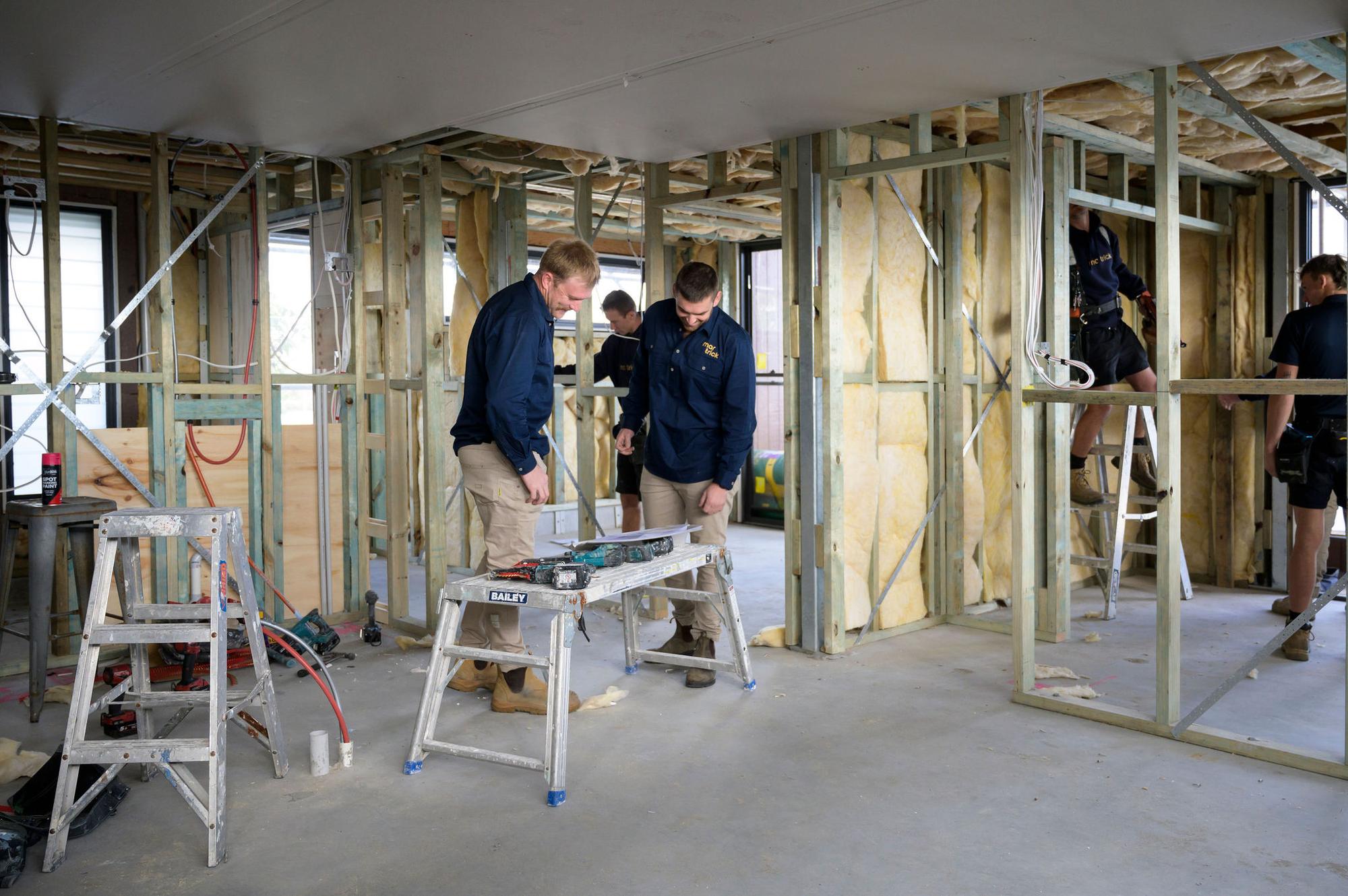
Deliveries need to be timed carefully. Storage space is limited. Trades need to be coordinated more tightly. There is less room for error, and poor planning becomes obvious much faster.
How Planning Changes on a Tight Site
Because of those constraints, early planning becomes critical.
Site set-out needs to be accurate from the beginning, as there is less flexibility to adjust positions once work starts. Sequencing also plays a larger role. Materials need to arrive at the right time, trades need to move through the site in a logical order, and unnecessary overlap needs to be avoided.
On a constrained site, small issues tend to affect the rest of the project more quickly, so resolving them early has a much bigger impact.
Cardiff South: Managing Access from Day One
On a custom home in Cardiff South, the site was positioned on a private battle-axe block behind existing properties.
Access was restricted and neighbouring homes were in close proximity, which meant the build needed to be carefully coordinated from the outset. Deliveries were scheduled to avoid congestion, trades were sequenced to keep the site moving without overlap, and set-out was handled early to ensure the design intent could be achieved within the available space.
These are not visible parts of the finished home, but they play a major role in how smoothly construction runs.
A considered entry that makes the most of a compact space, with warm timber and clean detailing throughout
Eleebana: Tight Access and Limited Staging Space
In Eleebana, the battle-axe configuration created similar constraints, but the challenge extended further into how the site was used during construction.
With limited space for material storage and movement, the build relied on disciplined planning and sequencing. Materials were staged carefully, long-lead items were organised early, and trades were coordinated to avoid congestion on site.
This level of control helped maintain momentum throughout the build, even within a restricted footprint.
A strong streetfront presence built on a constrained site, where careful planning allowed the design to deliver without compromis
Carrington: Tight Site, High Coordination
While not a traditional battle-axe block, the Carrington project presented similar constraints due to the tight nature of the site and proximity to neighbouring properties.
Access, boundary works, and general site movement all needed to be managed carefully. One of the more complex moments involved craning a Plungie pool through the home and into position, which required detailed planning and precise execution.
This type of coordination becomes more important on constrained sites, where there is less flexibility to adjust once work is underway.
The Plungie pool was craned through the home and into position, a moment that required precise planning on a tight site
Stockton: Boundary-to-Boundary Construction
In Stockton, the constraints were less about access and more about working within tight boundaries.
The build required boundary-to-boundary construction, including fire-rated systems and careful detailing along property lines. With minimal space to work within, the sequencing of trades and the coordination of materials became critical to keeping the project moving.
It is a different type of constraint, but it carries the same requirement for planning and control.
Building boundary-to-boundary means every part of the home is designed to work within tight limits, including the rooftop
Working Around Existing Properties
Building behind or alongside other homes means the surrounding environment needs to be considered.
Access routes are often shared or limited, noise and disruption need to be managed, and communication with neighbours becomes part of the process.
Maintaining those relationships helps avoid delays, reduces friction, and supports a smoother build overall.
What Tighter Sites Demand From the Builder
Constrained sites are less forgiving than standard blocks.
Small issues can have a larger impact, and delays can compound quickly if the site becomes congested or disorganised. That is where experience matters.
Understanding how to plan access, coordinate trades, and manage sequencing allows the build to progress without unnecessary disruption. It also helps maintain quality, even when the working conditions are tighter.
How These Projects Came Together
Across these projects, the constraints were different, but the outcome followed the same pattern.
With the right planning and coordination, the sites were managed effectively, the builds progressed without unnecessary disruption, and the finished homes delivered on the original design intent.
What stands out is not the constraint itself, but how it was handled.
Battle-axe and constrained blocks require more planning, not more compromise. When the site is understood early and managed properly from the start, it is possible to deliver a strong architectural outcome without sacrificing quality or design intent.
If you are building on a battle-axe or constrained block and want a builder who understands how to work within tighter sites, get in touch to talk through your project.